
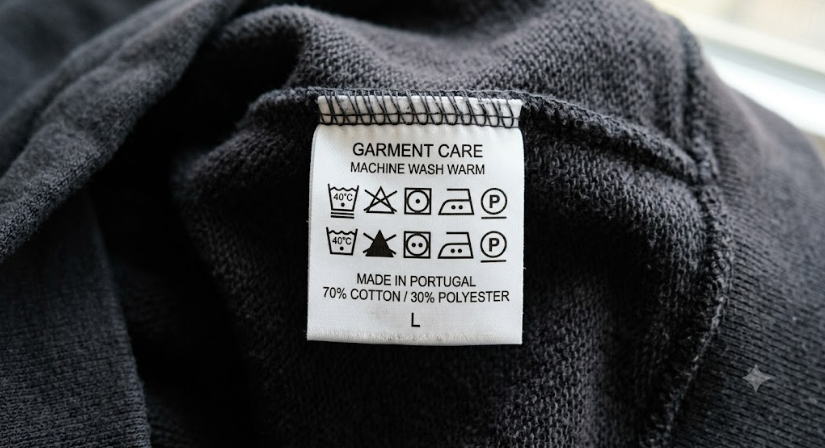
Almost nobody reads the care label, and almost everybody has ruined something because of it. Those little symbols look like a secret code, so most people ignore them, wash everything the same way, and then wonder why a favourite piece shrank, faded, or went slack. The information was right there the whole time, printed inside the collar. Once you can read it, you stop guessing and your clothes last far longer. Whether it's a Hellstar hoodie or a plain tee, the label tells you exactly how to keep it alive. Let's decode it.
Why the Label Exists at All
Care labels aren't a legal formality companies add grudgingly, they're genuinely useful instructions tuned to the specific fabric you bought. Different materials behave completely differently in water and heat, so a single washing routine can't be right for everything you own. Cotton, wool, synthetics, and blends each have their own tolerances, and the label translates those into simple instructions. The symbols themselves follow an international system, which is why they look similar across brands and countries even when the words differ. That standardisation is helpful once you learn it, since the same washtub symbol means the same thing whether the garment was made in Portugal or Vietnam. Manufacturers base these instructions on the actual fibre content and construction, testing how the fabric responds before printing the label. So when a label says wash cold, that's not caution for its own sake, it's usually because the dye bleeds or the fabric shrinks at higher temperatures. My honest opinion? The label is the single most ignored piece of genuinely useful information most people own, and reading it costs ten seconds against the cost of replacing a ruined garment. The system is built around five basic symbols, each representing one stage of care, and once you recognise those five shapes the rest is just details layered on top. Learn the shapes first and the numbers and dots make sense afterward.
The Five Symbols That Cover Everything
Every care label is built from five base shapes, and recognising them is most of the battle. The washtub represents washing, drawn as a little bucket of water. A triangle covers bleaching, telling you whether and how you can use it. A square represents drying, which trips people up since it looks unrelated to drying at first. The iron symbol is exactly what it looks like, a small iron shape. And a circle represents professional cleaning, mainly dry cleaning, aimed at the cleaner rather than you. Those five shapes appear in the same order on nearly every label, so once you know the sequence you can find the information you want instantly. Modifications then stack onto each base shape to add detail. A cross through any symbol means don't do it, which is the most important modifier to know, since a crossed-out tumble dryer or iron is a genuine warning rather than a suggestion. Dots inside a symbol indicate temperature or heat level, where more dots mean more heat is allowed. Lines underneath a symbol call for a gentler cycle, with more lines meaning more gentleness. That's genuinely the whole grammar of the system, five shapes plus a small set of modifiers, and it covers every label you'll ever encounter.
Reading the Washing Instructions
The washtub is the symbol you'll use most, so it's worth understanding in detail. Work through what it tells you:
A plain washtub means normal machine washing is fine at the temperature shown inside it
A number inside, like 30 or 40, gives the maximum water temperature in Celsius
Dots instead of numbers show temperature too, where one dot is cool and more dots mean hotter
Lines beneath the tub call for a gentler cycle, with one line for synthetics and two for delicates
A hand in the tub means hand wash only, and a cross through the whole thing means don't wash it in water at all
That second point matters most for everyday clothes, since temperature is where the most damage happens. A garment marked 30 will shrink or fade if you wash it hotter, and there's rarely any benefit to going warmer anyway, because modern detergents clean perfectly well in cold water. So washing at the labelled temperature or below is almost always the safe choice. The lines underneath deserve attention too, since ignoring a "gentle cycle" instruction and running a delicate piece on a normal cycle causes pilling and stretching that no amount of careful drying reverses. Read the tub first, every time, and you'll prevent most laundry disasters before they start.
Drying, Ironing, and the Symbols That Ruin Clothes
The drying and ironing symbols are where the most permanent damage happens, so they deserve real attention. The square handles drying, and a circle inside the square specifically means tumble drying. Dots in that circle show the heat level, so one dot means low heat and two means normal. A cross through the circle-in-square means no tumble drying at all, which is common on heavyweight fleece and anything likely to shrink or lose shape. Other square variations tell you how to air dry, with a horizontal line inside meaning dry flat, a vertical line meaning hang to dry, and curved lines suggesting drip drying. The iron symbol works the same way with dots, where one dot means low heat for delicate synthetics, two means medium, and three means high for cotton and linen. A cross through the iron means don't iron at all, and dots matter here because ironing a synthetic on a cotton setting can literally melt it. Here's the hands-on detail worth knowing: the tumble-dry symbol is the one most worth obeying strictly, because dryer heat causes more permanent damage than any other laundry step, shrinking fabric, cracking prints, and flattening the brushed interior of fleece. So when you see a crossed-out dryer symbol, treat it as an absolute rather than a preference. One honest limitation: labels give maximums and general guidance, not perfect instructions for your specific machine, so erring gentler than the label allows is always safe even when it isn't strictly required.
The Symbols People Misread Most
A handful of symbols cause repeated confusion, so knowing them specifically saves grief:
The circle, which means professional dry cleaning and is meant for the cleaner, not an instruction you act on
The triangle, representing bleach, where a plain triangle allows it and a crossed one forbids it entirely
The empty circle with no letters, still meaning dry clean, which people often mistake for something else
Lines under any symbol, which always mean "be gentler" rather than anything about the number of washes
The square with a curve, meaning drip dry, frequently confused with the flat-dry horizontal line
That first one causes real trouble, since people see the dry-cleaning circle and either panic or ignore the whole label. A crossed-out circle means don't dry clean, which matters because some solvents damage certain fabrics, and that's genuinely worth respecting. The triangle confuses people too, and the safest habit is treating any crossed-out triangle as "no bleach of any kind," since bleaching a garment that forbids it causes instant, permanent colour damage. Lines get misread constantly as well, so remember they only ever mean gentleness, never anything about frequency or count. My preference is to photograph a label the first time I wash something valuable, so I'm not squinting at faded print months later when the label itself has worn away, which happens more than you'd expect. A well-made cole buxton piece will carry clear washing guidance precisely because the fabric rewards being treated correctly.
Building Good Habits Around the Label
Reading the label once is good, but turning it into habit is what actually protects your wardrobe. The simplest rule is to sort by care requirement rather than just colour, grouping cold-wash items together so nothing gets accidentally cooked at a higher temperature. Check the label before the first wash specifically, since that's when a mistake does the most damage to a piece you've barely worn. When several garments in a load have different instructions, wash to the most delicate one among them, because gentler treatment never harms a sturdier piece while the reverse ruins the delicate one. Air drying deserves to be your default for anything you care about, honestly, since it sidesteps the single most damaging step regardless of what the label technically permits. Fabric softener is worth skipping on fleece and technical fabrics too, even when nothing forbids it, because it coats fibres and flattens texture. Also, when a label wears away to illegibility, which happens with frequent washing, default to cold water and air drying, since that combination is safe for nearly everything. Match your care to the garment and even inexpensive pieces last for years, while ignoring it destroys expensive ones just as fast.
Final Words
Care labels aren't decoration, they're specific instructions tuned to the exact fabric in your hands. Learn the five base shapes first: washtub for washing, triangle for bleach, square for drying, iron for ironing, and circle for professional cleaning. Then read the modifiers, where a cross means don't, dots mean heat level, and lines mean be gentler. Obey the tumble-dry symbol most strictly, since heat causes the most permanent damage. When in doubt, or when a label has worn away, wash cold and air dry, because that's safe for almost everything. Ten seconds of reading saves years of a garment's life.
FAQ BLOCK
Q: What do the dots inside care symbols mean?
A: Heat or temperature level. More dots means more heat is allowed, whether inside the washtub, the tumble-dry circle, or the iron. One dot is cool or low, and three is the hottest that piece can safely take.
Q: Which symbol is most important to follow?
A: The tumble-dry symbol. Dryer heat causes more permanent damage than any other step, shrinking fabric, cracking prints, and flattening fleece. A crossed-out dryer symbol should be treated as an absolute.
Q: What does a line under a symbol mean?
A: Be gentler. One line calls for a synthetics or permanent-press cycle, two lines for a delicate cycle. It never refers to how many times you can wash something, which is a common misreading.
Q: What does the circle symbol mean?
A: Professional cleaning, usually dry cleaning, and it's aimed at the cleaner rather than you. A crossed-out circle means don't dry clean, which matters since some solvents damage certain fabrics.
Q: What should I do if the label has worn away?
A: Default to cold water and air drying. That combination is safe for nearly every fabric, avoids the most damaging heat steps, and prevents shrinking, fading, and shape loss when you can't read the original instructions.