
(BPT) - Key takeaways:
- Proper ventilation is critical for the comfort and health of residents in multifamily constructions.
- Builders and contractors should carefully consider ways to improve airflow and indoor air quality without overcomplicating construction and installation.
- The Panasonic WhisperFresh line meets the needs of builders and residents.
When it comes to single-family and multifamily construction, ventilation cannot be overlooked. Without proper ventilation, individual units, common areas and other spaces in the building can become stale, hot and humid. Considering that Americans spend approximately 90% of their time indoors, proper ventilation is one of the cornerstones of the success of a high-density residential building project.
For builders and contractors, strategies that optimize airflow and indoor air quality (IAQ) can make a huge difference in residents' comfort and health as well as a building's long-term performance. Here are five key ways developers can improve airflow across every unit of a multifamily project.
Prioritize consistent fresh-air delivery
Achieving balanced airflow in every unit of a multifamily building is critical for the comfort of all residents. When ventilation is uneven, you'll end up with some units starved of fresh air and others overventilated, leading to discomfort and inconsistent air quality across the property.
To ensure building residents receive consistent fresh air in their units, builders and contractors should consider sourcing continuous-supply fans with precise cubic feet per minute (CFM) control. This feature ensures that fresh, outside air is delivered directly to each unit, maintaining consistent IAQ from the ground floor to the penthouse.
Design with tighter building envelopes in mind
Modern buildings are being built tighter than ever, improving energy efficiency and reducing air leakage. However, that tight envelope also means that fresh air cannot enter the building through cracks and gaps in walls and windows, leaving residents breathing stale air.
Without a well-designed mechanical air supply, you risk not only residents' comfort but also code compliance. To complement the tightness of modern buildings and deliver the comfort and IAQ residents expect, look for supply fans designed with ASHRAE 62.2 code compliance in mind from the start.
Another detail to consider is humidity. Left unchecked, trapped moisture encourages mold growth, compromising residents' IAQ and building integrity. This is of particular concern in hot, humid climates like Texas, the Gulf Coast and California, where climate control drives code compliance and comfort. Prioritize ventilation solutions that deliver enhanced climate-control performance with humidity and temperature sensing.
Don't overlook noise control
One of the primary reasons occupants tamper with or turn off mechanical ventilation systems is operational noise. It's not enough for a fan to perform well. Fans that operate quietly are essential in residential environments where bedrooms and living spaces sit in close proximity to mechanical equipment.
Contractors should prioritize supply fan models rated for ultralow sone levels, less than 1 sone. That's quieter than even a running fridge. Installing quiet equipment protects indoor comfort, ensures residents leave systems running as designed and minimizes noise complaints post-turnover.

Modern buildings are being built tighter than ever, improving energy efficiency and reducing air leakage. However, that tight envelope also means that fresh air cannot enter the building through cracks and gaps in walls and windows, leaving residents breathing stale air.
Plan for flexibility and scalability
Multifamily developments and single-family homes vary widely in layout and size, not just building by building. A single project might feature a mix of studio apartments, three-bedroom townhomes, in-law suites and sprawling corner units. Instead of sourcing different fan models to accommodate multiple layouts and unit sizes, choose flexible, scalable ventilation systems.
When sourcing supply ventilation systems, make sure the models you're considering offer versatile mounting options so that you can place the fan unit horizontally or vertically on a wall or ceiling. Also, look for models with simplified electrical integration so you can install them without worrying about proprietary wiring requirements. Combined, these features will enable easier installation in high-volume multifamily construction, regardless of size or layout.
Choose solutions built for long-term performance
After a building is finished and the residents have moved in, performing frequent maintenance in individual units can be challenging, disruptive and ultimately costly. That's why choosing durable, easy-to-maintain ventilation is crucial to the long-term performance of any multifamily building.
Look for options with features that can reduce downtime and operating costs over the life of the building. For example, supply fans that feature access doors provide residents with easy filter access without requiring a service call. Choosing a model that uses a standard filter also simplifies the process for residents and building owners today and down the line.
Sourcing for success
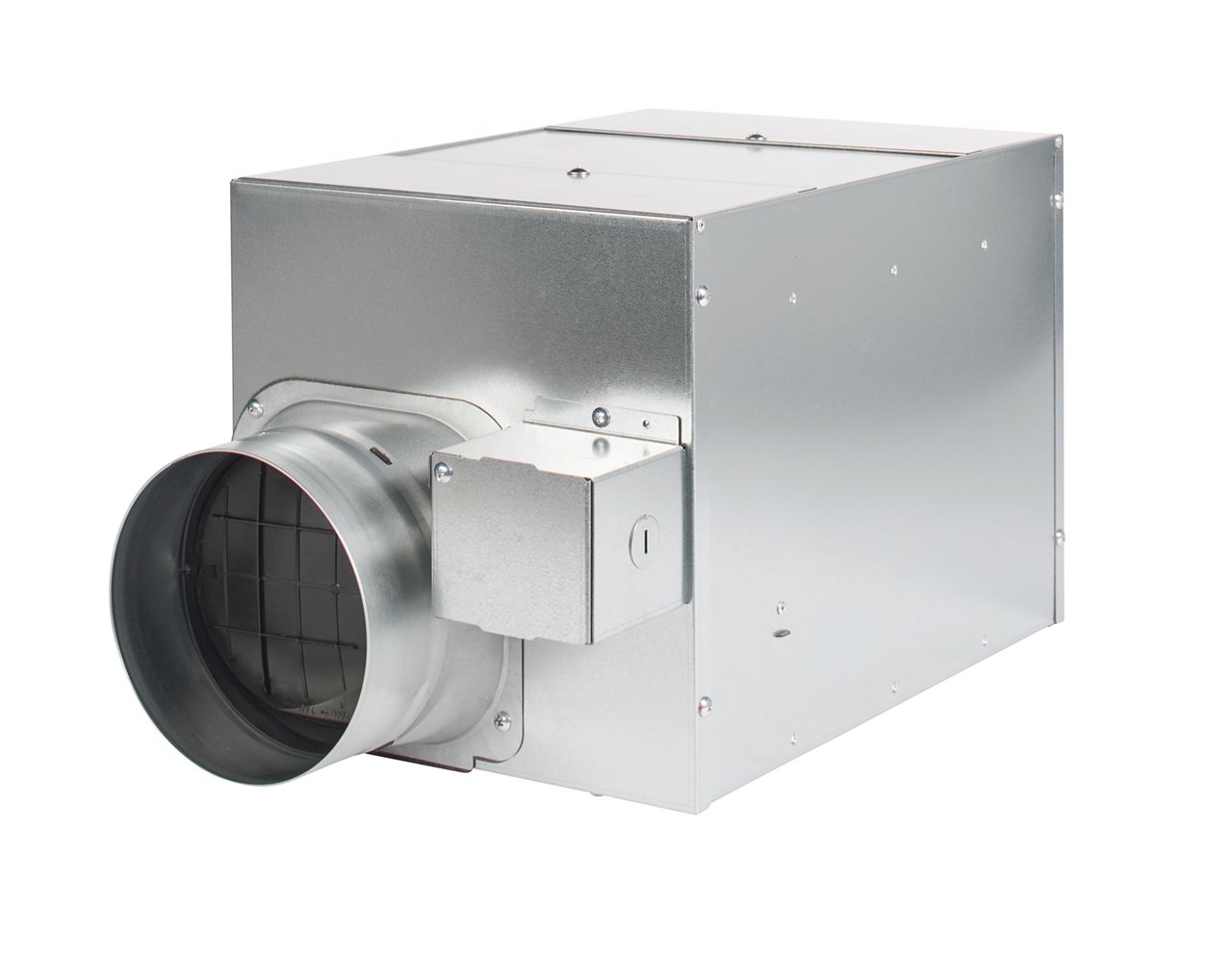
Finding fresh-air mechanical ventilation systems for multifamily projects doesn't have to be difficult. When searching for solutions that meet the above criteria, consider models from the Panasonic WhisperFresh® line.
The line includes three ventilation solutions - the original WhisperFresh® Select, as well as two new additions to the family: WhisperFresh® and WhisperFresh® Plus. All three models offer simplified compliance thanks to built-in FID displays, ASHRAE 62.2 Support, ENERGY STAR® certification and HVI certification. The line is also designed for easy installation, featuring flexible mounting options, a simplified hardwired design, a paintable access door and standard filters. And as the name suggests, these ventilation solutions are whisper-quiet, operating at less than 0.3 sones.
For builders seeking climate performance, the Plus and Select models include humidity and temperature sensing. The captured real-time environmental data gives builders performance visibility and control to meet evolving codes and residents' expectations.
"Our expansion of the WhisperFresh line was done with builders, contractors and multifamily developers in mind," said Leon van Oostende, Group Sales Manager at Panasonic Eco Systems. "And it couldn't have come at a better time. Across the country, energy codes are tightening, and ventilation requirements are becoming more complex than ever. With our three-tiered platform, builders can find the code-compliant model that best fits their project needs, from entry-level to climate-adaptive options."
For more information about Panasonic indoor air quality solutions, visit: https://iaq.na.panasonic.com/.