
(BPT) - Most students are focused on just getting through high school. However, some students finish high school with a diploma and a college degree thanks to dual enrollment programs.
That's what happened to Chicago resident Jennifer Brici. This spring, she graduated from DeVry University Advantage Academy (DUAA) and received not only a high school diploma but also an associate degree in Networking and Systems Administration. Now, she's off at DePaul University to study psychology.
Enrolling in DUAA offered Brici many academic and extracurricular opportunities that she would not otherwise have experienced at her old school. These opportunities allowed her to explore several of her interests, which eventually led her to choose psychology as her main area of study, and it all started with robotics.
"During my junior year at DUAA, I joined the school's robotics team," Brici said. "I've always wanted to do robotics but never had the chance at my old high school. During DUAA's open house, I learned that I could easily join the robotics team and start learning right away."
Joining a robotics team as a junior among mostly seniors was intimidating, but Brici rose to the challenge. When the group's adviser asked who would take on which responsibilities, Brici considered her organizational skills and volunteered to manage the team's tools.
"I organized every tool and part in that room," Brici said. "Anytime someone needed a part, I could quickly find it and bring it over. I may not have known what the parts did, but I knew where they were. That's how I found my place on the team and was quickly able to help build our robot and learn along the way."
Thinking outside the box
Brici's perspective as a relative outsider to robotics came in handy when the team was stumped with an engineering problem during the First Tech Challenge (FTC). For that year's competition, teams had to create a robot that could lift itself up. While the rest of the team was trying to make it work with a pull-up in mind, Brici suggested a different approach, flipping the robot's grip to perform a chin-up instead of a pull-up.
"I just thought to myself, which was easier to perform, a pull-up or a chin-up?" Brici said. "The simple switch ended up making a huge difference. That was when I realized that when it comes to robotics, thinking like an engineer doesn't always lead you to a solution."
As the year progressed, Brici became the robot's co-driver during matches. By the end of the year, the team voted her as team captain for the following school year. That season, the team also qualified for the FTC state competition, marking DUAA's first state qualification in approximately seven years.
Being part of the DUAA robotics team fed Brici's love for collaboration, teamwork, organization and problem solving, which served her well during her next project opportunity.
At the end of the robotics season, a professor approached the team and asked if they were interested in collaborating on a project with William Fremd High School (Fremd), another school in the Chicagoland area. Brici and her team were not given any information on what the project entailed, but Brici was excited about another opportunity to learn.
Brici and the DUAA robotics team worked alongside students in Fremd's business program to create a safety bracelet. The safety bracelet devised by the Fremd students features a hidden button that the wearer can press to text 911 their location in an emergency. To present their business plan, the Fremd group needed a working prototype, which Brici and her team successfully created.
"I'm not an expert in microcontrollers, but I worked closely with my professor and my robotics partner Victor," Brici said. "Victor worked on coding the device while I handled the physical design. It was a lot of work, but I had so much fun learning how to do it and also seeing how someone would build and present a prototype in the corporate world."
Expanding horizons
Robotics and business collaboration weren't the only opportunities enrolling in DUAA gave Brici. During her time in school, she also had the opportunity to participate in an FBI program that aligned with her other interests: criminology and psychology.
"I love teamwork and problem solving," Brici said. "Problem solving is a useful skill in all careers, but I wanted to find a career that used that skill the most. For me, criminology seemed like the most natural fit. When someone doesn't feel safe, they're not going to innovate or change, and communities aren't going to grow."
During her time in the FBI program, Brici met many agents from various walks of life, including a Navy SEAL, a kindergarten teacher, and a mental health therapist. Meeting these individuals showed her that criminology wasn't the only way to make an impact on public safety.
"All these people came from such different backgrounds and specialties, but all of them had transferable skills that allowed them to work at the Bureau," Brici said. "It made me realize that I didn't need to pursue criminology to do something like this and be locked into one career. Criminology pushes you toward law enforcement, but psychology is very broad, and I can go anywhere with it if I change my mind in the future."
Providing opportunities for exploration and success
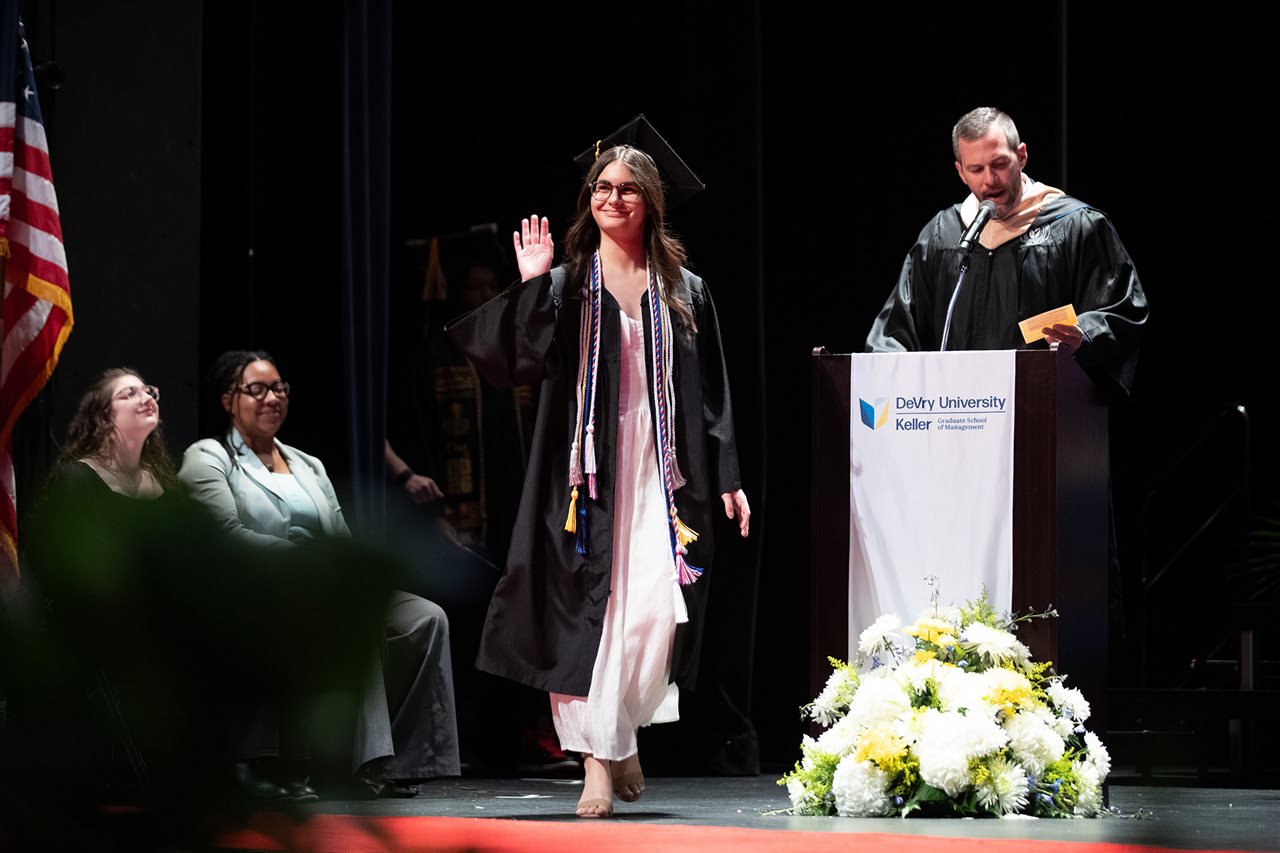
Brici is just one example of how dual enrollment like DUAA gives students a chance to explore their interests, inform their career decisions and ultimately give them an edge in life.
According to a new report from the Community College Research Center (CCRC) at Teachers College, Columbia University, dual enrollment students have higher rates of college attendance and completion than their peers who don't participate in similar programs. The report also found that dual enrollment students who enrolled in college in the first year after high school completed college credentials at higher rates than students who entered college immediately after high school without dual enrollment.
"We're incredibly proud of the work we do at DUAA and the students who take every opportunity the program offers to give themselves a head start in higher education and whatever careers they decide to pursue," said Brian Niro, assistant dean of teaching and learning at DeVry University. "My greatest hope is that every student graduates from this program with the experience, knowledge and self-confidence that will serve them the rest of their lives."
Brici echoes Niro's sentiment.
"Enrolling in DUAA opened my eyes to all that I'm capable of," she said. "It gave me a lot of confidence. It's that confidence that allowed me to apply to the FBI program, to apply to a school that's a little more competitive and to apply for scholarships I didn't think I'd get."
To learn more about how DUAA is helping high school students gain confidence and find their passions, visit DeVry.com.