
In a recent virtual sit-down, SEO Rank Media’s Caleb Turner interviewed Ross Simmonds – the mind behind Foundation Marketing, Distribution.ai, and the book Create Once, Distribute Forever, and a strategist trusted by brands like Snowflake and Canva.
Similar to a conversation that Caleb had with Semrush’s VP of Owned Media, Nick Eubanks, where they aligned on best practices in the ever-evolving world of SEO. Ross and Caleb expressed similar thinking on multiple fronts.
The conversation started with entrepreneurship and content, but it kept gravitating toward one theme:
In 2026, the brands that win will act like creators, think like distribution machines, and optimize for AI answers, not just blue links.
What Ross & Caleb Think Brands Must Do in 2026
1. Build like an entrepreneur (even if you’re a brand)
Caleb opens by asking Ross how he went from selling do-rags in high school to advising global SaaS brands.
Ross’ answer is all mindset:
- He always craved control over his time and capital.
- Selling do-rags was his first proof that he could create value and buy what he wanted.
- He took that same drive into content: first fantasy sports, then tech, startups, and marketing—eventually leading to working with top brands.
He describes business as another form of art: you start with a blank canvas, create value, and if people like it, they give value back.
Start with your personal brand and digital ecosystem
When Caleb asks how someone starting today (2025 into 2026) can follow a similar path, Ross doesn’t overcomplicate it:
“You need to be a person of value, and the best way to be a person of value is to add value to the world.”
His practical starting point:
- Get yourname.com and build a simple, professional website.
- Invest in good headshots and visuals so you look like a pro.
- Align your story across LinkedIn, Instagram, X, YouTube, etc.
- Choose the format that aligns with your strengths:
- Good on video → make videos.
- Better writer → write.
- Strong speaker → podcast.
- Designer → visual content.
Then comes the hard part: you need the courage to be disliked.
Your friends may clown you in group chats for posting business content, motivation, or marketing breakdowns. Ross’ view: that’s a feature, not a bug. Five years later, those same people will DM you for advice.
For brands, this means:
- Putting faces and names behind the logo.
- Letting your people publish under their own brand and build their own audience.
- Accepting that early growth is awkward and still worth it.

“Create Once, Distribute Forever” (and why distribution is your hidden lever)
Caleb then asks Ross about his mantra and book title: Create Once, Distribute Forever.
The origin story:
- Ross ran a successful fantasy sports blog.
- When he only shared posts on his own channels, results were modest.
- When he started seeding content into relevant forums and communities (Facebook groups, Reddit, GrowthHackers, HubSpot’s inbound.org), the same content exploded in reach.
- He realized distribution was as important as creation.
- One day he tweeted “create once, distribute forever” and it blew up—so he doubled down.
That idea now powers Distribution.ai:
- You upload a podcast, webinar, interview, or video. - The tool turns it into:
- Multiple LinkedIn posts
- Tweets/X posts
- An email newsletter
- A blog post
- You schedule everything out so one recording keeps working for you for weeks or months.
Real results Ross mentions:
- A landing page SaaS brand 10x’d referral traffic from X by auto-distributing blog content via Distribution.ai.
- Ross saves 30–40 minutes per newsletter by having Distribution.ai draft emails from his podcast content, in his own voice.
2025–2026 takeaway: Stop treating content as one-night-only events. Treat every major piece like a content asset you can reformat and redistribute across channels and time.
AEO in a World Where AI Keeps Resetting
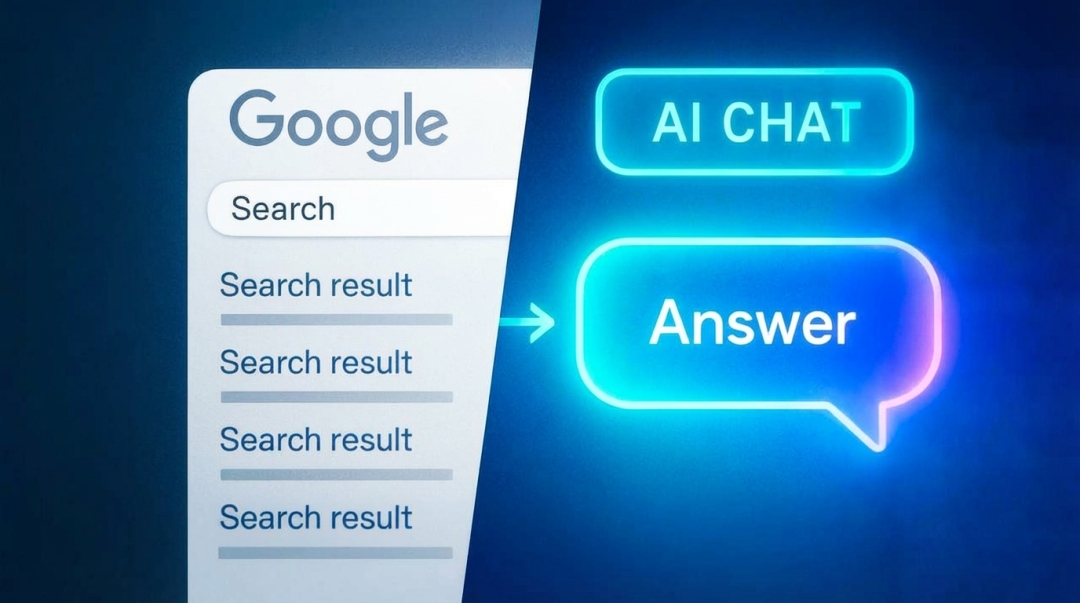
So far, we’ve talked about mindset, personal brand, distribution, and multi-surface presence.
Now for the uncomfortable truth at the heart of AEO:
ChatGPT on Monday isn’t the same as ChatGPT on Wednesday.
Each conversation is a new timeline:
- Different context
- Different memory state
- Different probability distribution
Your brand’s presence in AI answers can strengthen or fade, depending on context ripples you never see.
This fragmentation happens thousands of times a day across:
- Fresh ChatGPT conversations
- Perplexity sessions
- Gemini chats
- Copilot queries
- Other assistant interfaces that reset, forget, or partially remember.
The question AEO has to answer now is:
How do you keep your brand consistently visible when the channel itself has temporal discontinuities?
Let’s break down where the inconsistency really comes from.
The three sources of inconsistency
1. Probabilistic generation
When a user searches the internet via an LLM, a query-fan out is performed. Query fan-outs mean that one user question can spawn many internal “micro-queries” and generations inside the model or across multiple tools (search, retrieval, reranking, summarization).
Because each of those steps is also probabilistic, tiny differences in sampling or retrieved documents can cascade into noticeably different final answers—even when the user’s question looks identical on the surface.
2. Context dependence
Traditional search treats each query separately. Yes, it remembers some personalization, but queries are mostly stateless.
AI conversations are stateful:
- Each response uses the entire conversation so far as input.
- Ask “family hotels in Italy” after a long discussion about budget travel vs. luxury experiences and you’ll get very different recommendations.
- The deeper the conversation, the more context piles up, and the more answers drift.
Research shows models struggle with very long contexts (“lost in the middle” issues), meaning details from earlier in the chat can get ignored or mis-weighted.
For your brand, that means:
- Your visibility can degrade within a single long research session, not just between different sessions.
3. Temporal discontinuity
Each new chat is a fresh start:
- “Memories” are incomplete and selectively retrieved.
- Past conversations are searchable, but retrieval is heuristic and lossy.
- Grounding documents and uploaded files help, but we’ve all seen them randomly “not be there” when it matters.
Result: your presence partially or fully resets with each new conversation timeline. Your brand’s presence is probabilistic across infinite conversation timelines.
Why traditional SEO thinking breaks down

Old SEO was at least somewhat predictable:
- Ranking #3 for certain keywords meant you were #3 for millions of users.
- You could A/B test title tags and see fairly stable changes.
- You could “own” a position for a while.
In AI systems, that mental model collapses:
- No persistent ranking: There is no universal “position 3 answer.” Each conversation re-runs the probability distribution.
- Context advantage: If your competitor gets mentioned first in a thread, they have context momentum. Future answers in that thread are more likely to center them, even if you’re objectively a better fit.
- Probabilistic outcomes: You’re not optimizing for “rank 1”; you’re optimizing for a high probability of citation across infinite conversation paths.
What This Means for Your Teams

For CMOs and marketing leadership
- Brand consistency is now probabilistic, not fixed. Your job is to increase the probability of consistent appearance, not chase a mythical 100%.
- Budget AEO as an ongoing program, not a one-time initiative.
- Include KPIs from “share of voice”, to “consistency of citation across timelines and platforms”, to organic traffic/leads.
For content & SEO teams
- The mandate shifts from “cover all keywords” to “create context-resilient, semantically rich content.”
- Every important page should:
- Stand on its own (works as a first-touch answer).
- Still make sense if referenced after multiple other answers.
- Contain clearly structured facts AI systems can lean on.
Where SEO Rank Media Fits In

Caleb’s conversation with Ross highlights two realities:
- You need a creator + distribution mindset: personal brand, multi-surface presence, “create once, distribute forever.”
- You now operate in a world where AI conversations reset constantly, and your brand visibility is a moving probability field—not a fixed ranking.
At SEO Rank Media, we’re building strategies that sit right at that intersection:
- Semantic optimization for queries that are most important for your brand.
- Content and schema strategies for authoritative grounding.
- Testing regimes to measure and improve answer stability across queries, platforms, and time.
- Digital PR so your brand shows up in places where AI is looking, not just your own domain.
If you’re looking for a future ready, human first approach, reach out to us today.
Media Contact
Company Name: SEO Rank Media LLC
Contact Person: Caleb Turner
Email: Send Email
Phone: (213) 816-4124
Country: United States
Website: Seorankmedia.com